2026 Best Engraving Laser Machine for Global Buyers

Choosing the 2026 best Engraving Laser Machine requires more than comparing wattage, speed, or attractive product photos. Global buyers must examine beam quality, working area, software stability, extraction systems, maintenance access, and local service support. A polished showroom sample can hide inconsistent focus, weak rotary performance, or expensive replacement lenses.

Industry reports show continued expansion. Grand View Research identifies rising demand for laser marking and engraving across manufacturing, packaging, electronics, and personalized products. MarketsandMarkets also forecasts steady growth, driven by automation, traceability, and contactless processing. Their estimates differ. That difference matters. Market forecasts are useful signals, not purchasing guarantees.

Theodore Maiman, a pioneer of laser technology, famously said, “The laser is a solution looking for a problem.” Buyers should remember that warning. A 60-watt CO2 machine may suit wood, acrylic, and leather, while a fiber system fits metals and industrial identification. Diode machines can reduce entry costs, but their limitations may appear on dark materials or demanding production schedules. Small details matter, such as a clean edge on plywood, readable serial numbers, and stable alignment after eight hours of operation.

This guide compares machine types, applications, safety features, ownership costs, and supplier credibility. It also considers regional voltage, training, warranty response, and compliance documentation. No ranking is flawless. Real workshops differ. The best Engraving Laser Machine is the one that matches materials, workload, operator skill, and long-term service expectations.
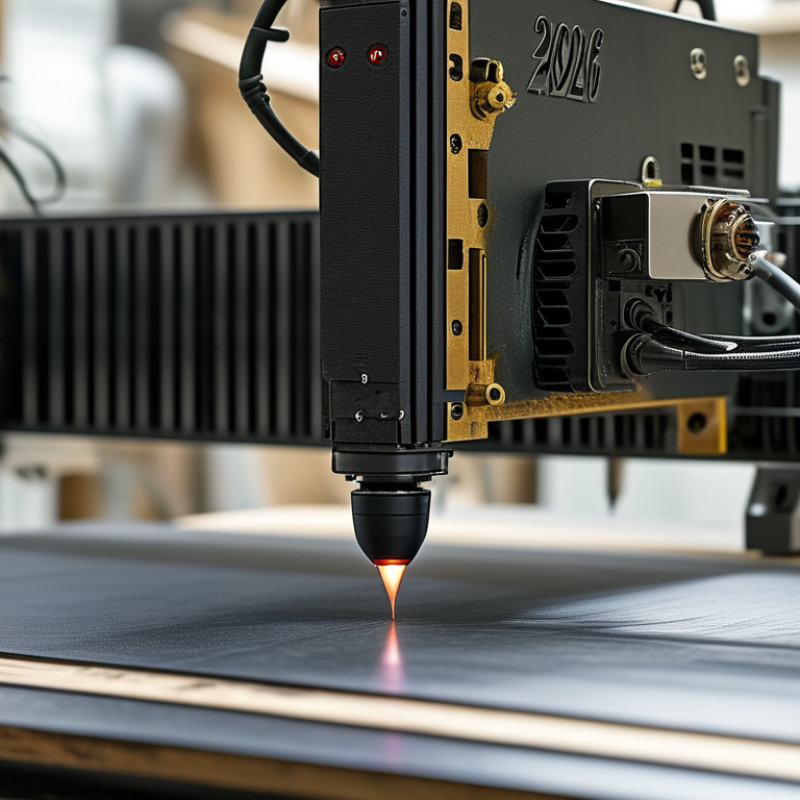
2026 Best Engraving Laser Machine for Global Buyers

What Is an Engraving Laser Machine in 2026?

What Is an Engraving Laser Machine in 2026?

An engraving laser machine is a computer-controlled tool that marks, cuts, or lightly etches selected materials. It directs a focused light beam across a work surface. The beam removes or changes material in precise patterns.

In 2026, these machines commonly support wood, acrylic, coated metal, leather, glass, and some industrial materials. The correct laser type depends on the material. Diode systems suit many craft projects, while CO2 systems often handle wood and acrylic efficiently. Fiber systems are designed for detailed metal marking. A reliable machine should offer stable motion, adjustable power, controlled speed, and repeatable positioning. An enclosure, ventilation system, emergency stop, and suitable protective measures are also essential.

Tips: Test settings on scrap material first. Keep a record of power, speed, focus, and pass count. Clean the lens regularly. Never assume one preset works for every material. Some surfaces react unpredictably, and my own early tests often produced darker edges than expected. That small mistake taught me to inspect ventilation, focus height, and material coatings before production. Buyers should also check software compatibility, maintenance access, training resources, and local safety requirements. A fast machine is not always the best choice. Consistent results matter more when every piece must match.

2026 Best Engraving Laser Machine for Global Buyers

What Is an Engraving Laser Machine in 2026?

An engraving laser machine uses a focused light beam to remove, discolor, or melt the surface of a material and create text, graphics, or fine patterns. The most common laser categories are diode, CO₂, fiber, and UV, each operating at a different wavelength and serving different material applications.

How to read the chart: Diode lasers commonly operate near 450 nm and are widely used for wood, leather, and coated materials. Fiber lasers typically operate near 1,064 nm and are suited to metals and many plastics. UV lasers operate near 355 nm and are used for low-heat, high-detail marking. CO₂ lasers commonly operate near 10,600 nm and are effective for wood, acrylic, glass, paper, leather, and other non-metal materials.

How Different Laser Types Serve Global Engraving Needs

2026 Best Engraving Laser Machine for Global Buyers

Different laser types solve different engraving problems. A diode laser suits wood, leather, coated metal, and small workshop projects. It uses less power and usually costs less to maintain. However, its cutting depth can disappoint on thick materials.

CO2 lasers work well on acrylic, plywood, glass, rubber, and textiles. Their larger working areas support signs, packaging, and production batches. They need stronger ventilation and careful lens cleaning. In humid regions, condensation can affect alignment and reduce engraving consistency. Small details matter.

Fiber lasers are the practical choice for bare metals, including stainless steel, aluminum, and brass. They produce sharp marks on tools, plates, and industrial components. A UV laser handles delicate plastics, coated surfaces, and heat-sensitive materials with less thermal damage. It often costs more, though. A neat sample can mislead. Buyers should test their actual materials, not only view showroom results.

From hands-on machine evaluations, I would compare marking speed, focus stability, replacement parts, software language, and local technical support. A machine may perform perfectly in a dry factory but struggle after overseas shipping. Check voltage compatibility, packing quality, operator training, and ventilation requirements before ordering. The best choice depends on material, production volume, available space, and the skill of the person using it.

Which Specifications Matter Most When Comparing Machines?

2026 Best Engraving Laser Machine for Global Buyers

Choosing the best engraving laser machine starts with the material, not the advertised wattage. A diode laser may suit wood, leather, and coated surfaces. A CO2 system handles acrylic and many nonmetal materials more effectively. Fiber equipment is usually better for marking bare metals. The wrong wavelength creates weak contrast, excessive heat, or uneven edges.

Compare the working area with your real products. A 400 × 400 mm bed may feel generous until a large panel arrives. Check spot size, repeatability, acceleration, and practical engraving speed. Published speed can be optimistic. Test samples reveal more. Examine cooling, exhaust design, emergency stops, enclosure quality, and electrical compatibility for your region. Reliable documentation matters, especially for voltage, maintenance intervals, and replacement parts. Software support is also important. A powerful machine becomes frustrating when file preparation is unstable.

Tips: Request sample engravings on your actual materials. Ask for test photos, measured accuracy, and running videos. Calculate the total cost, including ventilation, lenses, installation, training, and downtime. Do not choose maximum power automatically. I have seen lower-power systems produce cleaner fine text because their heat control was better. That detail is easy to miss.

How to Evaluate Materials, Applications, and Production Capacity

Choosing the 2026 best engraving laser machine starts with the material, not the advertised wattage. Wood, acrylic, anodized aluminum, glass, leather, and coated metals absorb laser energy differently. A 20-watt fiber system may mark stainless steel efficiently, while a CO2 system usually suits wood and acrylic better. Always request test samples using your actual material, thickness, color, and finish.

Application defines the useful specification. Fine jewelry markings require small spot size, stable focus, and repeatable motion. Large signs need a wider working area and reliable alignment. For mixed production, check rotary compatibility, exhaust performance, software support, and lens options. The International Organization for Standardization identifies risk assessment as a core machine-safety practice under ISO 12100. Laser classification and enclosure requirements also deserve attention under IEC 60825-1.

Capacity claims need practical verification. Grand View Research reported continued growth in the global laser marking market, driven by traceability and industrial automation. MarketsandMarkets has also projected strong expansion through 2028, but market growth does not guarantee a suitable machine for every workshop. Measure cycle time, setup time, maintenance intervals, and reject rates. Ask for a production demonstration, not only a catalog video. A machine producing 1,000 marks daily may struggle with uneven batches or frequent artwork changes. I have seen buyers overvalue peak speed. That assumption often fails. The better decision is usually a balanced system that matches material behavior, application detail, operator skill, and realistic monthly output.

2026 Best Engraving Laser Machine for Global Buyers - How to Evaluate Materials, Applications, and Production Capacity

Indicative specifications for evaluation only. Actual output depends on artwork complexity, material preparation, operator workflow, machine configuration, and local safety requirements.
Laser machine category Typical power range Suitable materials Common applications Typical working area Typical marking or cutting speed Production capacity indicator Key evaluation points
CO₂ engraving and cutting laser 40–150 W Wood, plywood, acrylic, leather, paper, cardboard, rubber, fabric, glass coating and anodized surfaces Signs, packaging prototypes, awards, craft products, architectural models and personalized gifts 600 × 400 mm to 1300 × 900 mm Engraving: approximately 300–1000 mm/s; cutting depends strongly on material and thickness Small-batch work; approximately 20–120 small items per hour when layouts are simple Check exhaust filtration, autofocus, bed design, lens options, cooling system and permitted material list
Fiber marking laser 20–100 W Stainless steel, carbon steel, aluminum, brass, copper, titanium and some engineered plastics Serial numbers, QR codes, tool identification, nameplates, jewelry and industrial traceability 110 × 110 mm to 300 × 300 mm; larger areas may require positioning or stitching Approximately 2000–12,000 mm/s, depending on lens, material and marking quality High-volume marking; approximately 100–1000 simple codes per hour Evaluate pulse settings, rotary-axis compatibility, fume extraction, software automation and barcode readability
UV marking laser 3–15 W Certain plastics, coated metals, glass, ceramics, films, electronic components and heat-sensitive materials Fine labels, electronics identification, cosmetic packaging, medical components and high-contrast marks 100 × 100 mm to 300 × 300 mm Approximately 500–3000 mm/s, subject to resolution and heat sensitivity Medium to high volume; approximately 60–500 small components per hour Request samples for each polymer, confirm thermal impact, and verify wavelength-specific safety controls
Diode engraving laser 5–20 W optical output Wood, plywood, cardboard, leather, dark acrylic, coated metal and selected food-safe surfaces Hobby products, signage, small gifts, prototypes and customized household items 400 × 400 mm to 800 × 800 mm Approximately 100–600 mm/s; cutting is generally slower and limited by material thickness Low to medium volume; approximately 10–80 small items per hour Confirm true optical output, air assist, enclosure, interlocks, ventilation and compatibility with transparent materials
Galvo scanning laser 20–100 W, depending on laser source Metals, coated metals, plastics and selected organic materials Fast batch marking, logos, data matrices, serial numbers and product personalization 100 × 100 mm to 600 × 600 mm, based on scanning lens Approximately 2000–12,000 mm/s for marking operations High throughput for repeatable parts; approximately 100–1200 simple marks per hour Prioritize fixture loading time, barcode software, rotary options, field uniformity and integration with conveyors
Flatbed CO₂ production laser 100–300 W Acrylic, wood sheets, plywood, textiles, foam, paperboard, leather and non-chlorinated rubber Retail displays, interior décor, packaging, furniture components and sheet-based production 1300 × 900 mm to 1600 × 1000 mm Engraving: approximately 500–1200 mm/s; cutting speed varies by thickness and power Medium to high volume; approximately 1–20 full sheets per shift, depending on nesting and cutting complexity Assess bed loading, sheet utilization, cutting-edge quality, extraction capacity, duty cycle and maintenance access
Production planning note: Capacity should be calculated from the complete cycle time: loading, fixturing, focusing, engraving or cutting, unloading, inspection and rework. Before purchase, request test samples using the buyer’s actual material, artwork, tolerance and target hourly output.

What Global Buyers Should Check Before Purchasing a Machine

2026 Best Engraving Laser Machine for Global Buyers

What Global Buyers Should Check Before Purchasing a Machine

Choosing an engraving laser requires more than comparing power ratings. Buyers should confirm the machine’s working area, laser type, spot size, and compatible materials. A small workshop may need a compact bed, while furniture production demands wider access and stable movement. Request test samples using your actual wood, acrylic, metal, or coated products. A polished demonstration can hide weak results on your material.

Check electrical requirements before placing an order. Voltage, frequency, plug type, ventilation, and temperature limits may differ across countries. Ask for safety documentation, emergency-stop details, enclosure specifications, and maintenance instructions. The machine should include practical protection against fumes, heat, and accidental exposure. Local certification may also be required before installation. Confirm this with an independent safety professional, not only the seller.

Service support often determines long-term value. Review the warranty, replacement-part availability, training method, and expected response time. Ask whether remote diagnosis works with your internet conditions. Calculate shipping, customs, installation, software, lenses, filters, and routine maintenance. These costs are easy to overlook. A spreadsheet helps, but it can still miss downtime and operator learning. I would reserve time for a supervised trial, because even accurate specifications cannot predict every production problem. Performance should be measured through repeatability, edge quality, noise, and daily operating comfort.

Enquire Now

We’re here to help and answer your questions.