How to Boost US Manufacturing for Global Buyers in 2026?
In recent years, US manufacturing has faced significant challenges. Global competition, supply chain disruptions, and labor shortages have strained the industry. According to the National Association of Manufacturers, nearly 85% of manufacturers report difficulties in attracting and retaining skilled workers. This gap underscores the need for urgent reforms to enhance US manufacturing's competitiveness.
As we look ahead to 2026, the focus must shift toward strategic investments and innovation. The McKinsey Global Institute predicts that advanced manufacturing technologies could add $2.2 trillion to the US economy by 2025. However, realizing this potential requires a commitment to workforce development and modernization.
To truly boost US manufacturing for global buyers, we must embrace collaboration across sectors. Partnerships between businesses, educational institutions, and government entities can cultivate a skilled workforce. Additionally, prioritizing sustainable practices may appeal to environmentally conscious consumers. Reflecting on these strategies, the path to revitalizing US manufacturing remains challenging yet essential for future growth.
Strategies for Enhancing US Manufacturing Competitiveness by 2026
In recent years, the U.S. manufacturing sector has faced significant challenges. According to the National Association of Manufacturers, nearly 80% of manufacturers report a talent shortage. This gap can hinder growth and innovation. By 2026, the U.S. must bridge this skill gap through targeted workforce training initiatives. Partnerships with local educational institutions can help create robust apprenticeship programs.
Utilizing advanced technologies is essential to enhance competitiveness. A report by Deloitte emphasizes that 80% of U.S. manufacturers plan to adopt automation and AI by 2025. This will not only improve efficiency but also increase product quality. However, investments in technology can be daunting. Many small manufacturers struggle to secure funding for such upgrades.
Moreover, supply chain resilience remains a pressing issue. The COVID-19 pandemic exposed vulnerabilities in global sourcing. Leaders must prioritize local sourcing and diversify suppliers. Adopting these strategies will safeguard against future disruptions. Yet, this shift may require time and patience, as building reliable local networks takes effort. Addressing these challenges head-on will create a more competitive manufacturing landscape by 2026.
Leveraging Advanced Technologies to Attract Global Buyers
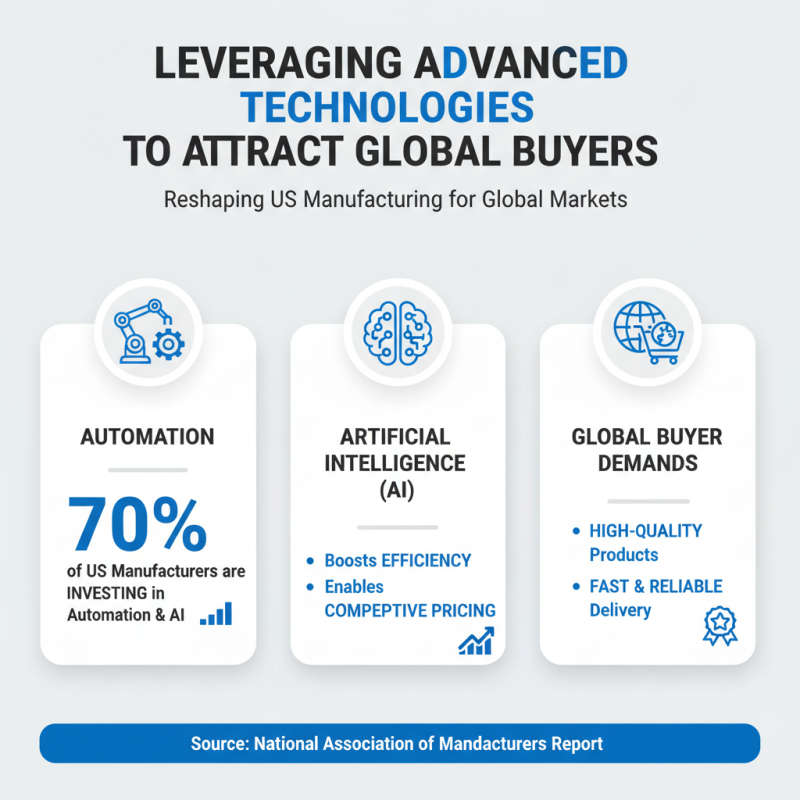
As global markets evolve, advanced technologies play a crucial role in reshaping U.S. manufacturing. The latest report from the National Association of Manufacturers indicates that 70% of U.S. manufacturing companies are investing heavily in automation and AI. These investments are not just about efficiency; they are key to meeting the demands of global buyers who seek high-quality products at competitive prices.
One emerging technology is 3D printing. This method allows for rapid prototyping and customization, which can significantly reduce lead times. According to a McKinsey study, companies that adopt additive manufacturing can cut product development time by up to 50%. Such innovations enhance flexibility, making U.S. manufacturers more attractive to buyers who require quick turnarounds and personalized solutions.
However, reliance on technology does pose challenges. Data security concerns are rising as manufacturers integrate smart tech into their processes. A report by Deloitte shows that 61% of manufacturers have faced cyber threats within the past year. Addressing these vulnerabilities is essential to build trust with global partners. As U.S. manufacturing seeks to enhance its appeal, balancing technological advancement and security will be crucial for long-term success.
Building a Skilled Workforce to Support Manufacturing Growth
The future of U.S. manufacturing hinges on cultivating a skilled workforce. According to the National Association of Manufacturers, 2.1 million manufacturing jobs could go unfilled by 2030 due to a talent shortage. This gap presents both challenges and opportunities in our quest to attract global buyers in 2026.
Enhancing vocational training programs is crucial. Many existing initiatives do not meet industry needs effectively. A study by Deloitte reveals that skills gaps cost manufacturers $1.5 trillion annually. Investing in targeted training can bridge this divide. In communities across America, collaboration between manufacturers and educational institutions is vital. This ensures that skills taught are relevant. Programs focused on advanced technologies, such as automation and AI, can prepare workers for future demands.
However, not all regions have equal access to these resources. Rural areas often face greater challenges in workforce development. As a result, manufacturing growth may remain unequal unless more initiatives are implemented. Local policies should address these discrepancies. Overall, fostering a skilled workforce requires commitment and innovation at every level.
Promoting Sustainable Practices in US Manufacturing
The manufacturing landscape in the United States is poised for a transformation in 2026, particularly through sustainable practices. A recent report by the National Association of Manufacturers indicates that nearly 70% of U.S. manufacturers are adopting greener production techniques. This shift not only enhances efficiency but also addresses the growing demand from global consumers for environmentally responsible products.
Integrating sustainable practices can reduce operational costs by up to 15%. Companies are increasingly investing in renewable energy sources like solar and wind. The U.S. Energy Information Administration states that renewable energy use in the manufacturing sector grew by 5% last year. This trend will likely continue as firms recognize the financial and reputational benefits of sustainability. However, the transition is not without challenges. Many manufacturers struggle with the upfront costs associated with implementing green technologies.
Moreover, supply chain transparency is becoming crucial. A report by McKinsey highlights that 78% of consumers want to understand a product's lifecycle. Companies must invest in tracking and reporting systems to meet these expectations. Addressing these aspects can be complex, yet the potential benefits far outweigh the hurdles. Consciously focusing on sustainability can position U.S. manufacturers as leaders in the global market.
Establishing Stronger Trade Partnerships with Global Markets
In recent years, the U.S. manufacturing sector has faced numerous challenges amid shifting global dynamics. To enhance trade partnerships with global markets by 2026, it's essential to attract international buyers through improved supply chains and product quality. According to the National Association of Manufacturers (NAM), about 66% of U.S. manufacturers believe that accessing new markets is crucial for growth. Strengthening these partnerships can significantly benefit both American companies and their global counterparts.
A focus on innovation and technology adoption can reinvigorate U.S. manufacturing. Currently, nearly 70% of manufacturers report their struggles with integrating advanced technologies. Proper investment in skills training is vital. The manufacturing workforce must adapt to rapid changes. Firms investing in worker training see 25% higher productivity rates, according to Deloitte. This emphasizes the importance of a skilled workforce that meets international standards.
Moreover, understanding the needs of global buyers is crucial. A survey by McKinsey indicates that 63% of international buyers prioritize sustainability. U.S. manufacturers must embrace eco-friendly practices to meet these expectations. However, transitioning to sustainable methods poses challenges and requires thoughtful planning. As we work towards 2026, fostering strong trade partnerships is a journey that demands reflection and ongoing effort.
How to Boost US Manufacturing for Global Buyers in 2026? - Establishing Stronger Trade Partnerships with Global Markets
| Aspect |
Current Status |
2026 Goal |
Strategies |
| Trade Agreements |
Limited coverage with key markets |
Expanded agreements with 10 key regions |
Negotiate bilateral and multilateral agreements |
| Supply Chain Resilience |
High dependency on international suppliers |
50% of components sourced domestically |
Invest in local supplier networks |
| Workforce Skills |
Skill gaps in advanced manufacturing |
80% workforce trained in modern technologies |
Enhance training programs and partnerships with educational institutions |
| Sustainability Practices |
Limited adoption among manufacturers |
Achieve 30% sustainability certification among manufacturers |
Implement green technologies and practices |
| Technological Integration |
Slow integration of smart manufacturing |
Adopt smart technologies in 60% of sectors |
Facilitate R&D investments in IoT and AI |