Top 10 CVBS Camera Modules for Global Buyers

Choosing the right Cvbs Camera Module requires more than comparing resolution numbers. Global buyers must examine signal stability, image clarity, compatibility, and supplier reliability.

This guide introduces ten camera modules selected for practical surveillance, industrial monitoring, vehicle systems, and embedded equipment. Each option should be reviewed for PAL or NTSC support, lens angle, low-light performance, operating temperature, and power requirements. A sharp image in a showroom means little if the module produces noise under weak lighting.

Real testing matters.

Experienced engineers often check the video output with different cable lengths, displays, and power supplies. They also inspect connector quality, mounting dimensions, datasheets, sample consistency, and after-sales communication. Certifications and regional requirements should be verified with the supplier before purchase, especially for products entering different markets.

No single module fits every project. Some models offer stronger night performance, while others provide better color balance or smaller dimensions. Trade-offs are unavoidable. That is worth admitting. A low-cost choice may increase integration work later, and a premium model may exceed the project’s actual needs. This overview aims to support careful comparison through technical evidence, supplier transparency, and realistic application details. Buyers should confirm current specifications, request samples, and perform their own validation before placing large orders.
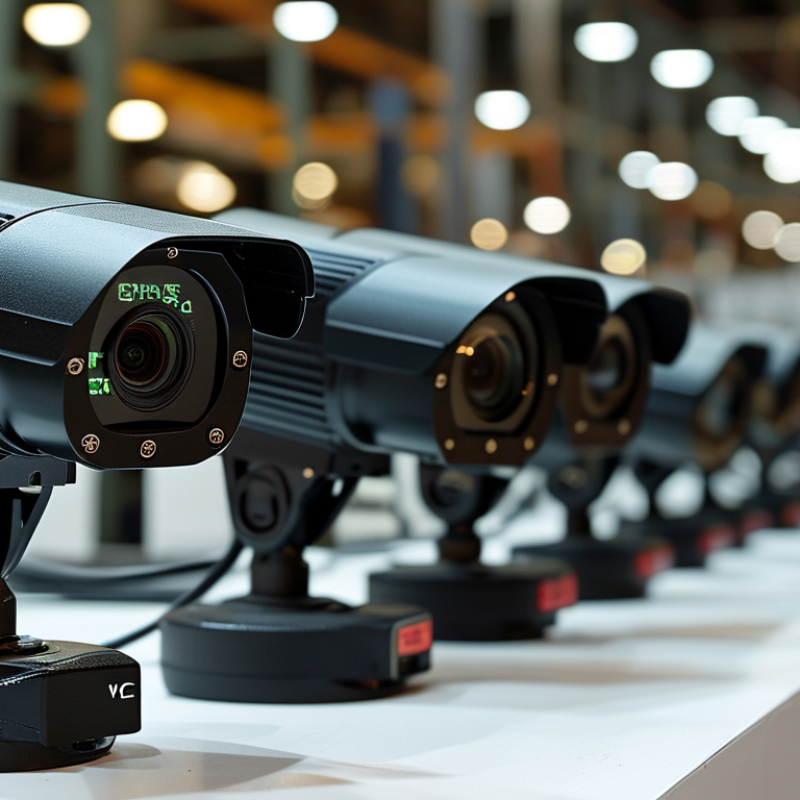
Top 10 CVBS Camera Modules for Global Buyers

What CVBS Camera Modules Are and How They Work

Top 10 CVBS Camera Modules for Global Buyers
What CVBS Camera Modules Are and How They Work

A CVBS camera module converts light into an analog composite video signal. It usually combines an image sensor, lens, infrared filter, and signal processor. The output travels through a 75-ohm coaxial connection to a monitor, recorder, or display controller. CVBS commonly supports NTSC at about 480 active lines or PAL at about 576 lines. It remains useful where compatibility and low processing delay matter.

The signal carries brightness, color, synchronization, and blanking information in one waveform. This design is simple, but it is not flawless. Long cables can introduce noise, ghosting, or color instability. In field testing, connector quality often changes the result more than expected. Small details matter. Buyers should verify format, lens angle, minimum illumination, power input, and operating temperature before comparing ten modules.

Market data explains why this older interface still appears in global sourcing lists. MarketsandMarkets estimated the video surveillance market at about USD 53.7 billion in 2024, with continued growth through 2029. Grand View Research also reported strong expansion, although its figures differ because the report scope and calculation method are not identical. These numbers cover the wider surveillance sector, not CVBS alone. That limitation deserves attention. A CVBS module may offer dependable integration for legacy equipment, mobile displays, and cost-sensitive projects, but it cannot provide the bandwidth or image detail of newer digital interfaces.

Key Specifications Used to Compare CVBS Camera Modules

When comparing the top ten CVBS camera modules, image format deserves careful attention. Confirm NTSC or PAL compatibility before testing any sample. A mismatch can produce rolling images or unstable color. Check horizontal resolution in TVL, but do not confuse it with digital pixel count. Sensor size, lens type, and field of view also shape practical image detail. A wide lens may cover a doorway, yet bend straight lines near the edges.

Low-light performance needs more than a printed lux value. Ask how that figure was measured. Test the module beside a dim corridor, under uneven lighting, and near a bright window. Review signal-to-noise ratio, dynamic range, exposure control, and infrared sensitivity. WDR can preserve details in shadows, but poor tuning may create unnatural movement. Frame rate, shutter behavior, and video latency matter when monitoring moving equipment. Small delays become obvious.

Mechanical and electrical specifications often separate a reliable module from a difficult installation. Compare supply voltage, current draw, connector layout, mounting holes, dimensions, and operating temperature. Confirm whether the housing blocks the lens or infrared path. Examine cable shielding and output stability during long bench tests. A datasheet may look complete, but it can omit test conditions. That is a weakness. I would request sample footage, dimensional drawings, and quality records before ranking a module highly. Field experience still matters more than attractive numbers.

Top 10 CVBS Camera Modules for Global Buyers

Top 10 CVBS Camera Modules for Global Buyers

Choosing among the top 10 CVBS camera modules requires more than comparing resolution numbers. Buyers should check PAL and NTSC support, lens options, voltage range, and connector layout. A stable 12V input and a clean 75-ohm video output can prevent flickering during installation. In practical bench testing, modules with strong low-light performance often produce more useful images than models claiming higher television lines. A 2.8 mm lens gives a wider view, while a 6 mm lens captures more distant details. Neither choice fits every site.

Reliability also depends on physical design. Inspect solder joints, cable shielding, heat control, and the module’s operating temperature range. For international projects, confirm documentation, packaging quality, and applicable electrical and environmental requirements before purchase.

A supplier should provide test data, wiring diagrams, and sample units. Claims without evidence deserve caution. I have found that even a capable module may perform poorly when paired with a weak power supply or an unsuitable display. That detail is easy to miss.

Tips: Test several samples under daylight and near-dark conditions. Compare faces, signs, and moving objects at the actual installation distance. Record color shifts and image noise. Ask about replacement parts and batch consistency. A short field trial is wiser than relying only on a specification sheet. Do not ignore local import and product compliance rules.

Applications, Compatibility, and Installation Considerations

Top 10 CVBS Camera Modules for Global Buyers

Applications, Compatibility, and Installation Considerations

CVBS camera modules remain useful in retrofit security systems, vehicle displays, access panels, and industrial monitors. MarketsandMarkets estimates the global video surveillance market will grow from USD 53.7 billion in 2023 to USD 83.3 billion by 2028. This expansion includes hybrid installations where older coaxial infrastructure still reduces replacement costs. For global buyers, confirm the video standard before comparing image quality. NTSC and PAL are not interchangeable in every recorder or display. Some modules also support selectable formats, but their menus may be limited.

Compatibility matters more than a promising sensor specification. Check the output type, 75-ohm termination, connector layout, power voltage, and field of view. A CVBS output usually requires a compatible monitor, recorder, or conversion interface. It will not automatically work with every modern digital input. Small details matter. A factory test screen can reveal rolling images, incorrect color, or unstable synchronization.

Installation quality decides practical performance. Use suitable coaxial cable, short power leads, and a regulated supply. Separate video cables from motors, relays, and high-current wiring. In long runs, interference may appear as diagonal lines or ghosting. Field technicians often test the module beside the recorder before final mounting. That simple step prevents expensive rework. I would also verify night performance in the actual enclosure, because infrared reflections can wash out faces. Standards such as IEC 62676 provide useful surveillance guidance, but real sites remain imperfect. A specification sheet cannot predict every installation.

Top 10 CVBS Camera Modules for Global Buyers - Applications, Compatibility, and Installation Considerations

Rank CVBS Module Type Typical Video Format Approx. Analog Resolution Lens and Field of View Typical Applications Compatibility Considerations Installation Considerations
1 Standard 2.1 mm Board Camera NTSC or PAL
1.0 Vp-p composite output
720 × 480 NTSC
720 × 576 PAL
Fixed 2.1 mm lens
Approximately 100° diagonal field of view
Indoor security Retail Access control Works with analog DVRs, monitors, video transmitters, and capture devices that accept the selected NTSC or PAL standard. Confirm the lens-to-sensor mount, supply voltage, connector pinout, and cable polarity before installation. Use shielded coaxial cable where possible.
2 Wide-Angle Mini Board Camera NTSC or PAL
Composite CVBS
Typically 700–960 TV lines, depending on the sensor and signal processor 1.8–2.1 mm lens
Approximately 120°–150° diagonal field of view
Vehicle interiors Small rooms Blind-spot monitoring Requires a CVBS-compatible display or recorder; a wide-angle lens may produce barrel distortion at the image edges. Mount near the centerline when possible. Leave clearance for the lens barrel and avoid placing the lens directly behind reflective glass.
3 Low-Light Monochrome Module Monochrome NTSC or PAL
Analog composite
Commonly 420–600 TV lines 2.8 mm or 3.6 mm fixed lens
Approximately 70°–100° diagonal field of view
Warehouses Industrial areas Night observation Compatible with standard analog video inputs, but the displayed image is black and white. Infrared sensitivity depends on the sensor and optical filter. Use stable illumination or infrared lighting for very dark scenes. Avoid direct exposure to bright lamps, which can reduce usable contrast.
4 IR-Sensitive Day/Night Module Color in daylight; monochrome under low light
NTSC or PAL CVBS
Typically 700–960 TV lines 2.8–6 mm lens options
Approximately 45°–100° diagonal field of view
Outdoor entrances Loading bays Perimeter monitoring Requires a recorder or monitor that supports the selected analog standard. Verify whether the module uses an internal or external infrared-cut filter. Provide a weather-resistant housing for outdoor use. Prevent nearby surfaces from reflecting infrared light back into the lens.
5 Wide-Dynamic-Range Module NTSC or PAL
Composite analog output
Typically 700–960 TV lines 2.8 mm or 3.6 mm fixed lens
Approximately 70°–100° diagonal field of view
Lobby entrances Vehicle gates Backlit scenes Can connect to ordinary CVBS inputs; wide-dynamic-range performance is processed inside the camera module and does not require a special recorder. Position the camera so the bright background does not dominate the frame. Test exposure settings with the actual lighting conditions.
6 Water-Resistant Embedded Module NTSC or PAL
1.0 Vp-p composite video
Usually 420–700 TV lines 2.1–3.6 mm lens
Approximately 70°–120° diagonal field of view
Outdoor equipment Marine compartments Utility cabinets Verify the module’s actual ingress protection level, operating voltage range, connector sealing, and compatibility with the host equipment. Use sealed cable glands, drip loops, and corrosion-resistant fasteners. The enclosure must protect both the module and its cable connection.
7 Automotive Rear-View Module Usually NTSC or PAL CVBS
Reverse-polarity protection may be included
Typically 420–800 TV lines 2.1–2.8 mm lens
Approximately 120°–170° diagonal field of view
Backup cameras Fleet vehicles Industrial vehicles Confirm the vehicle display’s video standard, trigger-wire behavior, input voltage range, and whether the display expects a mirrored image. Connect power through a fused circuit. Route the video cable away from ignition and motor wiring, and verify the image orientation before final mounting.
8 Pin-Hole Covert Module NTSC or PAL
Composite video
Commonly 420–700 TV lines 1.7–2.8 mm pin-hole lens
Approximately 80°–120° diagonal field of view
Intercoms Point-of-sale equipment Door stations Requires a compatible CVBS input and adequate space for the small lens aperture and wiring harness. Align the pin-hole opening carefully and keep the lens surface clean. Check local privacy and surveillance regulations before deployment.
9 Long-Focal-Length Detail Module NTSC or PAL
Analog composite output
Typically 700–960 TV lines 6–12 mm lens
Approximately 25°–55° diagonal field of view
License plates Cash desks Long corridors Compatible with standard CVBS equipment, but the narrower field of view requires accurate aiming and a suitable mounting distance. Use a rigid mount to prevent image movement. Calculate the target distance and lens angle before drilling or permanently fixing the bracket.
10 Compact Board Camera with On-Screen Controls NTSC or PAL
Menu-controlled CVBS output
Typically 700–960 TV lines 2.8–6 mm lens options
Approximately 45°–100° diagonal field of view
Machine vision assistance Kiosks General surveillance Connects to standard analog inputs; configuration buttons or a local control cable may be required to adjust exposure, white balance, and backlight compensation. Keep the control interface accessible during commissioning. Lock or document settings after adjustment to prevent accidental changes during service.

How to Select the Right CVBS Camera Module for Your Project

Top 10 CVBS Camera Modules for Global Buyers

How to Select the Right CVBS Camera Module for Your Project

Selecting a CVBS camera module starts with the display and recorder, not the camera itself. Confirm NTSC or PAL compatibility before comparing image quality. A mismatch can create rolling images, distorted colors, or no picture. Check the connector, 75-ohm coaxial input, supply voltage, and expected cable distance. Small details matter.

MarketsandMarkets’ 2024 Video Surveillance Market report estimates the broader market at approximately USD 83.3 billion in 2024. Its forecast also shows continued demand through 2029, including cost-sensitive analog installations. This does not make every CVBS module suitable. It simply explains why legacy-compatible components remain practical in factories, vehicles, retail spaces, and replacement projects.

Look beyond the advertised TV-line number. A 700-TV-line module may perform poorly with weak lighting or a low-quality lens. Ask for measured sensitivity, signal-to-noise ratio, dynamic range, operating temperature, and latency data. Test a sample beside the actual DVR and monitor. Night scenes reveal more than daytime charts. Sony’s Image Sensors Market report is often cited for the continuing importance of sensor performance in imaging applications, but sensor data alone cannot predict the final analog picture.

My field experience suggests choosing stable exposure and clean cabling before chasing maximum resolution. I still review this decision. Some projects need infrared support; others suffer from unwanted glare. A short test under real lighting is usually worth more than a polished specification sheet.

Top 10 CVBS Camera Modules for Global Buyers

How to Select the Right CVBS Camera Module for Your Project

How to read this chart

CVBS camera modules commonly follow 525-line/60-field systems with approximately 480 active vertical lines or 625-line/50-field systems with approximately 576 active vertical lines. Select a module that matches the video standard supported by your monitor, DVR, encoder, or capture device. Confirm the required frame rate, connector, lens angle, illumination performance, operating voltage, and environmental rating before purchasing.

Reference values are based on established analog television raster conventions. NTSC-family formats are shown at approximately 29.97 frames per second, while PAL and SECAM-family formats are shown at 25 frames per second.

Enquire Now

We’re here to help and answer your questions.