Top 10 Extruded Aluminum Manufacturers for Global Buyers

Choosing an extruded aluminum manufacturer is rarely as simple as comparing prices on a spreadsheet. Global buyers must examine alloy control, die design, dimensional accuracy, surface treatment, certifications, and delivery reliability. A polished website proves little. A factory tour, sample inspection, and documented quality records reveal much more.

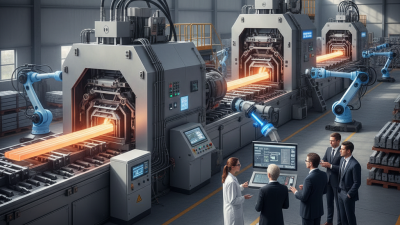
Dr. J. Gilbert Kaufman, a recognized aluminum industry expert, wrote, “Aluminum is a material for the future.” That future depends on disciplined manufacturing. A dependable supplier should control billet heating, extrusion speed, quenching, aging, cutting, and final inspection. These details affect strength, straightness, surface finish, and assembly performance. They also influence whether a profile fits correctly after thousands of kilometers of transport.

This guide presents the top 10 extruded aluminum manufacturers for global buyers. The selection considers production capacity, technical support, export experience, quality systems, customization, and response speed. It also looks beyond impressive claims. Can the manufacturer maintain tight tolerances across repeated orders? Can it provide traceable mill certificates? Does its packaging protect long profiles from scratches and bending?

No list is perfect. Buyer priorities differ.

A construction contractor may value fast delivery, while an automotive supplier may demand advanced alloy expertise. Some manufacturers excel at standard profiles but struggle with complex dies. Others offer strong engineering support but require larger minimum orders. Readers should therefore use this ranking as a practical starting point, not a final verdict. Careful samples, clear drawings, and written specifications remain essential before signing a long-term agreement.
Top 10 Extruded Aluminum Manufacturers for Global Buyers

Defining Extruded Aluminum and Its Global Manufacturing Role

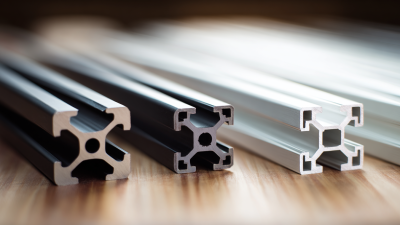
Extruded aluminum is shaped by forcing a heated billet through a steel die. The die creates a continuous profile with a fixed cross-section. Common examples include channels, tubes, frames, heat sinks, and structural rails. After extrusion, profiles may be stretched, cut, aged, machined, or finished.

Lightweight, corrosion-resistant, and recyclable, aluminum supports many global manufacturing sectors. It appears in building systems, transportation equipment, renewable energy structures, and industrial machinery. Manufacturers adjust alloy, temper, wall thickness, and dimensional tolerance for each application. A reliable supplier should provide mill certificates, inspection records, and clear traceability from billet to finished profile.

In practical sourcing, the profile drawing is only the beginning. Buyers should review die design, minimum order quantities, packaging, surface protection, and production capacity. A small change in corner radius can affect strength, cost, and tooling life. Quality checks may include dimensional measurement, surface inspection, hardness testing, and chemical verification.

The process is not flawless. Warping, die lines, scratches, and inconsistent aging can still occur. A polished sample may hide production limitations. That is why experienced buyers request trial runs and measurable acceptance criteria. They should also compare shipping conditions, regional certifications, and communication speed. Global production depends on more than low pricing; it requires stable processes, honest documentation, and realistic delivery commitments.
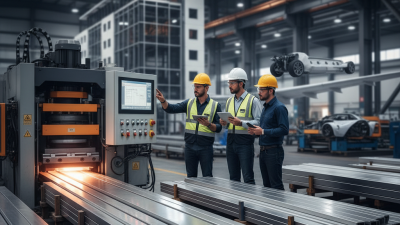

Key Criteria for Evaluating Extruded Aluminum Manufacturers

Top 10 Extruded Aluminum Manufacturers for Global Buyers

Key Criteria for Evaluating Extruded Aluminum Manufacturers

Choosing an extrusion manufacturer requires more than comparing quoted prices. Start with technical capability. Review available alloy grades, profile sizes, wall thickness limits, and dimensional tolerances. A reliable supplier should explain how die design, billet quality, and cooling control affect the finished profile.

Ask for recent inspection records, material certificates, and sample pieces from comparable projects. Look closely at corner definition, surface marks, straightness, and cut length. These small details often reveal process discipline. Independent testing can verify tensile strength, hardness, chemical composition, and coating performance. Certifications matter, but only when the production system supports them consistently.

Manufacturing capacity also deserves careful checking. A supplier may operate advanced presses but still struggle with short runs or urgent tooling changes. Request realistic lead times for die production, trial extrusion, finishing, packing, and shipment. Traceability should connect each batch to its billet, process record, and inspection result. Communication is another practical test. Clear answers usually indicate stronger project control.

No manufacturer scores perfectly. I have seen attractive samples hide weak packaging or unstable tolerances. Visit the facility when possible, or arrange a documented remote audit. Check maintenance routines, worker training, environmental controls, and corrective-action records. A thoughtful evaluation leaves room for uncertainty, because published capability is not always daily performance.

Regional Profiles of Leading Extruded Aluminum Producers

For global buyers, the top 10 extruded aluminum manufacturers are best understood through regional strengths, not rankings alone. North American producers often emphasize certified traceability, tight tolerances, and stable delivery for construction and transport programs. Their plants commonly pair billet preheating with automated stretching and multi-axis inspection. That detail matters. A profile may look impressive, yet capacity can change during peak building seasons. Buyers should verify current press schedules, alloy availability, and finishing queues before signing contracts.

European extrusion producers typically compete through engineering depth, energy management, and complex profile design. They often support thermal breaks, precision machining, and small-batch development for façades, rail systems, and industrial equipment. Documentation is usually strong, including alloy certificates, dimensional reports, and surface-finish records. Still, paperwork does not replace sampling. A technically perfect drawing can fail when a thin wall twists after anodizing.

East Asian manufacturers frequently offer broad alloy ranges, high-volume presses, and integrated powder coating or anodizing. Their regional advantage often comes from dense supplier networks and flexible tooling support. In the Middle East, South Asia, and Southeast Asia, leading plants are expanding around infrastructure, solar, and modular building demand. Conditions vary sharply. Humidity, port congestion, and local power reliability can affect delivery more than quoted production speed. A reliable comparison should examine extrusion force, die-maintenance practice, inspection frequency, packaging, and corrective-action records. Site audits and trial orders remain useful, because even experienced buyers can overestimate a supplier’s consistency.

Manufacturing Capabilities, Quality Standards, and Custom Services

Top 10 Extruded Aluminum Manufacturers for Global Buyers

Manufacturing capability should guide any top-ten supplier review. The International Aluminium Institute reported about 70.6 million tonnes of primary aluminum production in 2023. This scale increases buyer choice, but it also makes verification essential. Leading extrusion manufacturers typically control billet casting, die design, extrusion, heat treatment, and finishing in one system. They should provide clear alloy records, dimensional reports, and traceability from billet to shipment. ISO 9001 supports process consistency, while ISO 14001 indicates structured environmental management. Automotive buyers may also require IATF 16949 certification. Certificates alone are not enough.

Custom service separates capable suppliers from catalog sellers. Look for die simulation, prototype support, thin-wall extrusion, CNC machining, anodizing, powder coating, and thermal-break assembly. A serious manufacturer should explain tolerances before production. It should also share inspection methods, including CMM checks, coating thickness tests, and tensile results. The Aluminum Association notes that extrusion demand follows construction, transport, and industrial applications, where repeatability matters more than attractive samples. A ranking can mislead when it ignores tooling response time or minimum order quantities. I have seen technically strong suppliers lose projects through weak packaging. That detail deserves attention.

Tips: Request a pilot batch before signing a long-term contract. Compare five samples under identical lighting. Ask for recent third-party test reports, not only internal claims. Check whether recycled content is verified through chain-of-custody records. Also confirm packing design for sea freight. Small omissions become expensive.

Top 10 Extruded Aluminum Manufacturers for Global Buyers - Manufacturing Capabilities, Quality Standards, and Custom Services

Rank Anonymized Supplier Profile Primary Market Coverage Typical Press Capacity Common Alloy Families Maximum Profile Size Length Capability Dimensional Reference Finishing Services Quality and Compliance Framework Custom Services Best Fit Applications
1 Profile A – High-Volume Integrated Extruder Asia, Europe, North America, and Middle East 1,800–5,500 metric tons 6060, 6061, 6063, 6082 Up to approximately 400 mm circumscribing diameter 6–15 m standard cut lengths EN 755 / EN 12020 or ASTM B221, project-dependent Anodizing, powder coating, liquid coating, mill finish, brushing, polishing ISO 9001-based quality system; material traceability; RoHS and REACH support Die design, CNC machining, drilling, punching, assembly, packaging, export documentation Construction systems, solar frames, industrial profiles
2 Profile B – Precision Architectural Extruder Europe, United Kingdom, North America, and Australia 900–3,500 metric tons 6060, 6063, 6005A, 6061 Up to approximately 250 mm circumscribing diameter 3–14 m cut lengths EN 12020 for precision architectural profiles Anodizing, powder coating, wood-effect coating, thermal break processing ISO 9001; Qualanod or Qualicoat-type process requirements when specified System development, thermal-bar assembly, corner fabrication, prototype sampling Windows, doors, curtain walls, railings
3 Profile C – Automotive and Transportation Specialist Europe, North America, East Asia, and Southeast Asia 1,500–6,000 metric tons 6005A, 6061, 6082, 7003 Up to approximately 350 mm circumscribing diameter Up to approximately 20 m before secondary cutting Customer drawings, EN 755, ASTM B221, and automotive specifications Anodizing, conversion coating, powder coating, shot blasting, precision straightening IATF 16949-oriented systems, ISO 9001, PPAP support, batch traceability Advanced die trials, CNC machining, bending, welding, dimensional inspection Vehicle structures, battery trays, rail components
4 Profile D – Aerospace-Grade Precision Supplier North America, Europe, and selected Asian markets 800–3,000 metric tons 2024, 6061, 6082, 7075 where applicable Up to approximately 200 mm circumscribing diameter 3–12 m cut lengths Customer drawing requirements and aerospace material specifications Anodizing, chemical conversion, precision machining, non-destructive testing support AS9100-oriented quality systems, ISO 9001, full heat-lot traceability First-article inspection, CNC machining, inspection reports, controlled documentation Aircraft interiors, structural components, defense equipment
5 Profile E – Solar and Renewable Energy Specialist Global project markets, especially Europe, North America, and the Middle East 1,000–4,000 metric tons 6005A, 6063, 6061 Up to approximately 300 mm circumscribing diameter 4–16 m cut lengths ASTM B221, EN 755, and project-specific solar standards Anodizing, mill finish, powder coating, anti-corrosion surface treatments ISO 9001; RoHS and REACH documentation; corrosion and coating inspection Rail and bracket design, cutting, drilling, kitting, container-load optimization PV mounting systems, inverters, battery enclosures
6 Profile F – Industrial Heat-Treatment Specialist Asia, Europe, North America, and Latin America 1,200–5,000 metric tons 6061, 6082, 6005A, 6063 Up to approximately 450 mm circumscribing diameter 6–18 m cut lengths EN 755, ASTM B221, and customer mechanical-property requirements Anodizing, powder coating, passivation-compatible treatments, precision sawing ISO 9001; controlled T4, T5, T6, and T66 heat-treatment processes Die design, straightening, CNC machining, tensile testing, hardness testing Machine frames, heat sinks, automation equipment
7 Profile G – Small-to-Medium Section Specialist Europe, North America, and Southeast Asia 500–2,000 metric tons 6063, 6060, 6061, 6005A Up to approximately 150 mm circumscribing diameter 2–12 m cut lengths EN 12020, EN 755, and approved customer drawings Anodizing, powder coating, polishing, brushing, film application ISO 9001; profile inspection using coordinate measuring and optical systems Rapid prototyping, low-volume tooling, cut-to-length, drilling, tapping LED housings, electronics, furniture, medical equipment
8 Profile H – Large-Section Structural Extruder Asia, Middle East, Europe, and infrastructure markets 2,500–8,000 metric tons 6061, 6082, 6005A, 7003 Approximately 500–700 mm circumscribing diameter 6–20 m before secondary processing ASTM B221, EN 755, and structural engineering specifications Mill finish, anodizing, powder coating, sawing, structural fabrication ISO 9001; mechanical testing; heat-lot and billet traceability Large-die engineering, friction-stir or conventional welding support, assembly Bridges, railcars, industrial platforms, large frames
9 Profile I – Sustainable Low-Carbon Production Specialist Europe, North America, Australia, and green-building markets 1,000–4,500 metric tons 6060, 6063, 6061, 6005A Up to approximately 300 mm circumscribing diameter 4–15 m cut lengths EN 755, EN 12020, and environmental product requirements Anodizing, powder coating, mill finish, recycled-content material options ISO 9001; ISO 14001-oriented environmental management; recycled-content declarations Material-origin documentation, life-cycle data support, lightweight design assistance Green buildings, renewable energy, public infrastructure
10 Profile J – End-to-End Custom Fabrication Supplier Global OEM, distributor, and project-based procurement 600–4,000 metric tons 6060, 6063, 6061, 6082 Up to approximately 350 mm circumscribing diameter 2–16 m cut lengths EN 755, ASTM B221, EN 12020, or approved drawings Anodizing, powder coating, liquid coating, machining, bending, welding ISO 9001; incoming-material inspection; final dimensional and surface inspection Design-for-extrusion review, tooling, prototypes, machining, assembly, private-label packaging OEM components, retail systems, industrial and commercial products

Note: The table uses anonymized supplier capability profiles rather than company or brand names. Press capacities, profile dimensions, tolerances, finishes, certifications, and delivery conditions vary by facility and project; buyers should request current certificates, control plans, material test reports, sample approvals, and technical quotations before placing an order.

How Global Buyers Can Select the Right Aluminum Supplier

Top 10 Extruded Aluminum Manufacturers for Global Buyers

How Global Buyers Can Select the Right Aluminum Supplier

Choosing an aluminum supplier requires more than comparing price lists. Experienced buyers inspect alloy control, profile tolerances, surface finish, and production capacity. Ask for recent inspection reports, mill certificates, and traceability records. A reliable manufacturer should explain how billets are tested, stored, and processed. Request physical samples that match your drawings. A clean cut, consistent wall thickness, and even anodizing reveal useful details.

Tips: Compare suppliers using the same technical brief. Specify alloy, temper, dimensions, finish, packaging, annual volume, and destination. Check whether the factory performs extrusion, cutting, machining, and finishing internally. Outsourcing is not automatically a weakness, but unclear responsibility can create delays. Confirm lead times in writing. Also review quality certifications and product compliance documents required in your target market.

Communication quality often predicts delivery performance. Notice how quickly the supplier answers technical questions. Do they identify risks, or simply promise everything? Discuss die ownership, tooling charges, minimum order quantities, and replacement procedures before placing an order. International shipments also need accurate commercial invoices, packing lists, and customs information. A supplier may offer a lower quotation but lack export experience. That mistake can become expensive. I have found that a small pilot order is wiser than trusting polished presentations. Still, even pilot orders can disappoint when acceptance criteria are vague. Write measurable standards before production begins.

Top 10 Extruded Aluminum Manufacturers for Global Buyers

How Global Buyers Can Select the Right Aluminum Supplier

Mechanical strength is one practical factor when evaluating an extrusion supplier. The chart compares commonly used extrusion alloys by representative minimum tensile and yield strength values in MPa. Actual requirements depend on alloy temper, profile thickness, applicable standards, testing methods, and the supplier’s quality-control system. Buyers should request certified test reports and confirm compliance with the required standard before placing an order.

Enquire Now

We’re here to help and answer your questions.