Top 10 Innovations in Precision Engineering that are Changing the Industry?

Precision engineering is a pivotal sector driving innovation across multiple industries. From aerospace to medical devices, advancements are reshaping how products are designed and manufactured. According to a recent report from MarketsandMarkets, the precision engineering market is expected to reach USD 180 billion by 2025, reflecting a significant growth trend.

The integration of automation and advanced materials is changing traditional methods. For instance, additive manufacturing improves design flexibility and reduces waste. However, challenges remain. Not all companies are adapting quickly to these changes. The gap in skills among workers poses a risk to future advancements.

Moreover, while precision engineering offers incredible accuracy, there are instances where over-engineering can lead to inefficiencies. Balancing innovation with practicality is essential. As the industry evolves, continuous reflection on these dynamics will help harness the full potential of precision engineering.
Top 10 Innovations in Precision Engineering that are Changing the Industry?

Emergence of Advanced Materials in Precision Engineering

Top 10 Innovations in Precision Engineering that are Changing the Industry?

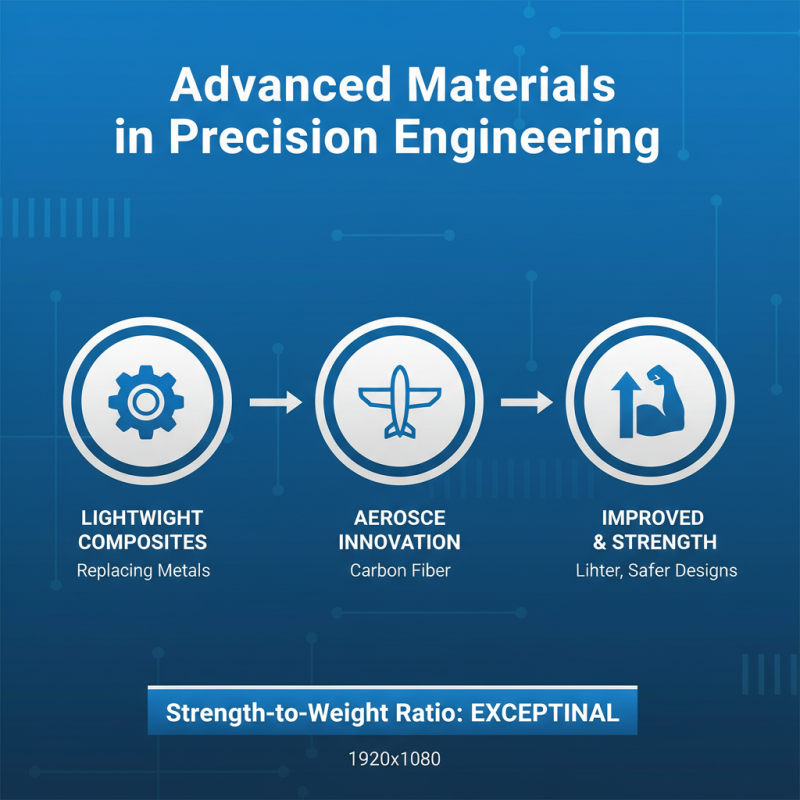
Advanced materials are revolutionizing precision engineering. Lightweight composites are replacing traditional metals. This shift improves efficiency and strength in various applications. For instance, carbon fiber is increasingly used in aerospace. Its strength-to-weight ratio is exceptional. Engineers can now design lighter aircraft without compromising safety.

Moreover, 3D printing is becoming more mainstream. It's allowing for intricate designs that were once impossible. Engineers can prototype rapidly, saving time and resources. However, quality control remains a concern. Not all printed parts meet the required standards. This inconsistency can lead to failures in critical applications.

Innovations like nanomaterials are gaining traction. They enhance properties like durability and resistance. However, the long-term impacts of these materials are still unknown. Engineers must consider environmental factors and recycling challenges. While advanced materials offer great potential, careful evaluation is essential to harness their benefits effectively.
Impact of Automation and Robotics on Precision Manufacturing

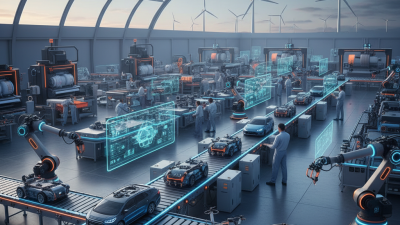
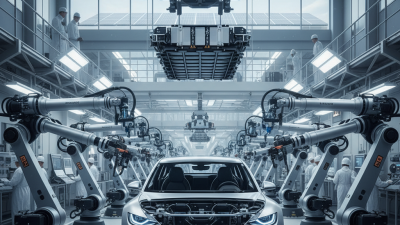
Automation and robotics are reshaping precision manufacturing. These technologies enhance efficiency and reduce human error. Factories are now utilizing robotic arms for assembly and machining. This leads to faster production cycles and improved quality.

However, the integration of automation isn't without challenges. Workers may feel displaced by machines. Training is essential for the workforce to adapt. Ensuring they have the right skills is crucial. Increased reliance on technology can also lead to system failures. Regular maintenance and monitoring are necessary.

Tips for successful integration include starting with small projects. This allows for gradual adjustment. Involve employees in the process to gain their support. Open communication is vital for easing their concerns. Emphasizing the benefits of teamwork between humans and robots can foster a positive environment. Embracing change is key to thriving in this evolving industry.

Role of 3D Printing in Revolutionizing Precision Engineering Techniques

3D printing is transforming the field of precision engineering. This technology allows for the creation of complex parts that were once impossible to manufacture. Customization is now easier, catering to specific needs and requirements. Design iterations can occur rapidly, saving time and resources.

However, challenges persist. Print quality can be inconsistent, leading to potential issues in functionality. Material limitations mean that not all components can be produced with the same durability. Engineers must regularly evaluate the trade-offs between speed and precision. The learning curve in mastering this technology can also pose significant hurdles for newcomers.

Despite these issues, 3D printing offers exciting possibilities. It can significantly reduce waste during production, promoting sustainability. The ability to create lightweight yet strong structures is valuable in various applications, from aerospace to medical devices. Precision engineering is evolving, and 3D printing is a crucial part of that evolution.

Top 10 Innovations in Precision Engineering that are Changing the Industry

Innovation Impact Key Benefits Applications
3D Printing Reduces manufacturing time and cost Customization, reduced waste, rapid prototyping Aerospace, automotive, medical devices
CNC Machining Increases precision and accuracy High repeatability, complex geometries Heavy machinery, electronics, consumer goods
Laser Cutting Enhances cutting speed and precision Minimal material loss, versatile material compatibility Sign making, metal fabrication, textiles
Computer-Aided Design (CAD) Streamlines product design process Enhanced visualization, modifications on-the-go Architecture, product design, engineering
Additive Manufacturing Facilitates complex part production Material efficiency, design freedom Prototyping, custom tooling, aerospace components
Robotic Automation Increases production efficiency Labor cost reduction, improved safety Assembly lines, packaging, quality control
Artificial Intelligence (AI) Optimizes manufacturing processes Predictive maintenance, real-time data analytics Supply chain management, quality assurance
Internet of Things (IoT) Enhances connectivity of machines Data collection, remote monitoring Smart factories, equipment management
Nanotechnology Enables advancements in materials Improved properties of materials, miniaturization Electronics, medicine, energy systems
Hybrid Manufacturing Combines traditional and advanced techniques Flexibility, reduced cycle times Metal additive processes, prototyping

Integration of AI and Machine Learning in Precision Engineering Processes

The integration of AI and machine learning in precision engineering is remarkable. This technology enhances processes, improves accuracy, and reduces errors. AI algorithms analyze complex data sets faster than humans can. They can predict potential failures, allowing for proactive maintenance.

Machine learning can also optimize design processes. Engineers input parameters, and the system suggests effective design modifications. This can potentially shorten production time. However, the reliance on AI raises concerns. Over-dependence might lead to a decline in human skills.

Some precision engineering sectors struggle with this shift. Traditional engineers may feel endangered by advanced technologies. Adapting to these innovations requires continuous learning. Embracing change can foster resilience and innovation. Balancing human expertise with machine intelligence is crucial for future success.

Top 10 Innovations in Precision Engineering Integrating AI and Machine Learning

This bar chart illustrates the significance of various innovations in precision engineering, highlighting how AI and Machine Learning are transforming the industry. Each innovation is measured based on its impact scale from 1 to 10, where 10 represents the highest impact.

Development of Enhanced Measurement Technologies for Precision Control

The development of enhanced measurement technologies plays a crucial role in precision engineering. By leveraging advanced sensors and data analytics, industries can achieve remarkable levels of accuracy. According to a recent report, precision measurement tools have improved error margins to as small as 0.1 microns in certain applications. This is a game-changer for sectors like aerospace and medical devices.

Latest technologies, including laser scanning and 3D metrology, offer new ways to ensure high precision. Laser scanning can capture complex geometries with incredible detail and speed. Meanwhile, 3D metrology systems provide real-time feedback, significantly reducing the time from design to production. However, the accuracy of these systems can vary, leading to challenges in standardization.

Despite these advancements, challenges remain. For example, integrating new technologies often requires significant training. A survey revealed that 45% of companies face a skills gap when implementing new measurement tools. Additionally, while the cost of advanced tools is decreasing, the initial investment can still be a barrier for small businesses. These factors require ongoing reflection and adaptation in the industry.

Enquire Now

We’re here to help and answer your questions.