Top 10 Nail Paint Making Machines for Global Buyers
Global nail color production is becoming more precise, automated, and quality-driven. Grand View Research reports that the global nail polish market reached approximately USD 14 billion in 2023, with continued growth expected across professional and consumer channels. That expansion increases demand for reliable filling, mixing, grinding, and vacuum systems. A Nail Paint Making Machine must do more than produce attractive color. It should support stable viscosity, smooth pigment dispersion, accurate filling, and repeatable batch control.
Cosmetic chemist and educator Perry Romanowski often describes formulation as “a combination of art and science.” That principle also applies to equipment selection. A polished bottle may hide poor mixing, trapped air, or inconsistent pigment distribution. The right machine helps reduce these risks through controlled speed, sealed processing, temperature awareness, and cleanable contact parts. ISO 22716 guidance on cosmetic Good Manufacturing Practices also highlights controlled production, hygiene, documentation, and quality checks. These points matter for buyers comparing suppliers across different regions.
This Top 10 guide examines practical machine differences, including capacity, blade design, vacuum performance, automation, maintenance, and compatibility with solvent-based or water-based formulas. Market reports provide useful direction, but they do not replace factory testing. A perfect ranking is impossible. One machine may suit a small private-label workshop, while another fits a high-volume plant with robotic filling. Buyers should request trial batches, material certificates, spare-parts support, and clear electrical specifications before ordering. The cheapest option can become expensive when cleaning takes longer than expected. That detail is easy to overlook.
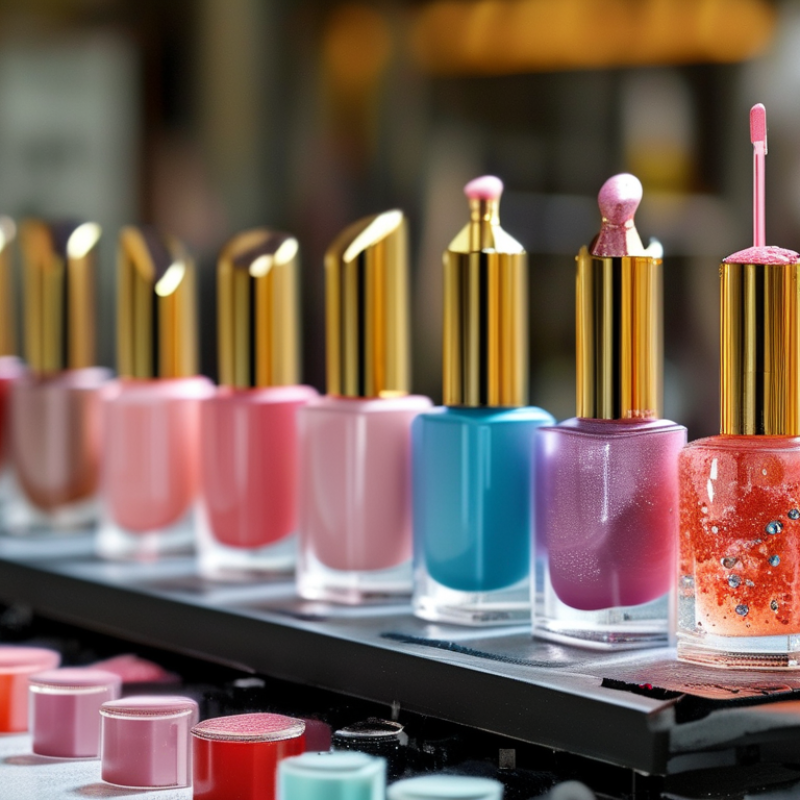
Nail Paint Machinery Taxonomy: Mixing, Grinding, Filling, and Capping
Top 10 Nail Paint Making Machines for Global Buyers
Nail paint machinery follows four practical stages: mixing, grinding, filling, and capping. Each stage affects color stability, texture, output, and waste. Grand View Research valued the global nail polish market at about USD 14.7 billion in 2023, with continued growth forecast through 2030. That demand makes equipment selection more technical than it first appears.
Start with viscosity. Mixing tanks should provide controlled agitation without trapping excessive air. Grinding equipment, such as bead mills, reduces pigment particles and improves color uniformity. Poor dispersion can leave visible streaks on the brush. Filling machines must handle small bottle volumes accurately, especially with thick or fast-drying formulas. Servo-driven dosing systems usually offer better repeatability than basic pneumatic systems. Small details matter. Capping machines need adjustable torque, because loose caps cause leakage while excessive torque damages threads. Mordor Intelligence projects roughly 5% annual growth for the nail polish market through 2029, increasing pressure on consistent automation. Buyers should still test real formulas before purchasing. Laboratory samples can behave differently at production scale. That assumption deserves testing. Check cleaning time, changeover losses, operator access, and compatibility with local safety requirements. A high-speed machine may look impressive, yet slower filling can sometimes reduce rejects and rework.
Ranking the Top 10 Machines by 10–500 L Batches and GMP Compliance
Top 10 Nail Paint Making Machines for Global Buyers
Ranking the Top 10 Machines by 10–500 L Batches and GMP Compliance
For 500 L batches, a vacuum homogenizing mixer ranks first. It offers strong dispersion, vacuum control, and cleaner transfer. The 300 L vacuum emulsifying mixer follows, especially for smooth, bubble-free formulas. A 200 L high-shear mixer ranks third for fast pigment distribution. Fourth is a 150 L planetary mixer, useful for thicker nail products. The 100 L anchor agitator takes fifth place, offering gentle wall scraping. These machines should use sanitary stainless steel and documented cleaning procedures.
The 75 L inline rotor-stator mixer ranks sixth for pilot production. Seventh is a 50 L jacketed mixer, suitable for controlled heating and cooling. An 8th-place 30 L vacuum disperser supports small development batches. Ninth is a 20 L laboratory mixer for formula testing. A 10 L benchtop homogenizer completes the ranking. GMP compliance depends on more than the mixer. Surface finish, calibration, batch records, and operator training matter equally. A perfect ranking is impossible. Formula viscosity can change everything.
Tips: Check the working volume, not only the tank size. Keep at least 20% free space for mixing and foam control. For solvent-based nail paint, confirm suitable electrical protection, ventilation, and grounding. Ask for material certificates and cleaning validation support. I would test a real formula before purchasing. Product brochures can look convincing, but factory trials reveal practical problems.
Top 10 Nail Paint Making Machines for Global Buyers
Ranking generic machine configurations by working-batch capacity and GMP-oriented design features
The comparison covers common nail paint production configurations from 10 L laboratory systems to 500 L production systems. Batch volumes represent typical working capacities. The GMP-oriented feature count is based on the presence of sanitary product-contact surfaces, cleanable vessel geometry, closed transfer capability, controlled mixing, and production documentation support. Feature counts are not GMP certification ratings.
High-Shear Mixers at 1,000–3,000 rpm for Pigment Dispersion Control
Top 10 Nail Paint Making Machines for Global Buyers
Global buyers should compare high-shear mixers, not only tank capacity or advertised output. A 2024 Grand View Research report estimated the global nail polish market at about USD 14.3 billion in 2023. It also projected roughly 6.4% annual growth through 2030. That growth raises pressure for repeatable pigment dispersion. Small shade differences can become obvious on a retail display.
Mixers operating between 1,000 and 3,000 rpm can break pigment agglomerates and improve color uniformity. However, faster is not always better. Rotor diameter, batch viscosity, solids loading, and vessel geometry change the actual shear level. A 2,400 rpm setting may overheat a small batch or pull air into the coating. Operators should record temperature, mixing time, and visual dispersion after every trial. ISO 8780 guidance on dispersion testing supports more disciplined process checks.
For practical selection, buyers should request particle-size results, viscosity data, and repeatability records from equipment suppliers. A 2023 technical report from the International Organization for Standardization notes that dispersion assessment needs controlled procedures, not visual judgment alone. That point is easy to overlook. A Hegman-style drawdown check, microscopic review, or particle-size measurement can reveal defects hidden in a glossy sample. Machines with variable-speed control, sealed vessels, cooling provisions, and easy cleaning usually support safer scale-up. Still, laboratory results may not predict production perfectly. Real batches deserve another test.
Vacuum Homogenizers at 0.06–0.08 MPa for Bubble-Free Polish
Top 10 Nail Paint Making Machines for Global Buyers
Vacuum Homogenizers at 0.06–0.08 MPa for Bubble-Free Polish
For global buyers, vacuum homogenizers deserve close attention when comparing the top ten nail paint machines. A vacuum level of 0.06–0.08 MPa below atmospheric pressure helps remove trapped air during mixing. This matters when polish is filled into narrow bottles or used with fine brushes. Small bubbles matter.
Grand View Research reported continued growth in the global nail polish market, supported by premium finishes and rising product innovation. Meanwhile, ISO 22716 guidance emphasizes controlled production, equipment hygiene, and documented procedures for cosmetic manufacturing. A suitable homogenizer should offer stable vacuum control, scraper mixing, adjustable rotor speed, and easy cleaning access. Stainless-steel contact parts can also support repeatable batches. However, vacuum alone cannot fix poor pigment wetting or excessive surfactant use. That part is often underestimated.
Tips: Test the 0.06–0.08 MPa range with your actual formula, not only water. Check bubble removal after filling, cooling, and twenty-four hours of storage. Record temperature, mixing speed, vacuum time, and batch viscosity. A transparent trial log reveals problems faster than sales claims. Operators should inspect seals regularly, because small leaks can reduce vacuum performance. Perfect results are not guaranteed. Formula behavior still requires experienced adjustment.
Top 10 Nail Paint Making Machines for Global Buyers - Vacuum Homogenizers at 0.06–0.08 MPa for Bubble-Free Polish
| No. | Machine Configuration | Nominal Working Volume | Gross Vessel Volume | Vacuum Level | Homogenizer Speed | Agitator Speed | Heating Method | Product-Contact Material | Recommended Use |
| 1 | Laboratory Vacuum Homogenizer | 2–5 L | 7 L | −0.06 to −0.08 MPa | 0–3,000 rpm | 20–60 rpm | Electric jacket | 316L stainless steel | Formula development and shade testing |
| 2 | Small-Batch Vacuum Nail Polish Mixer | 10 L | 15 L | −0.06 to −0.08 MPa | 0–3,600 rpm | 15–50 rpm | Water or electric jacket | 316L stainless steel | Pilot production and premium colors |
| 3 | Compact Vacuum Emulsifying Mixer | 20 L | 30 L | −0.06 to −0.08 MPa | 0–3,600 rpm | 20–70 rpm | Electric jacket | 316L stainless steel | Small commercial batches with glitter or pigments |
| 4 | Medium Vacuum Homogenizing Tank | 50 L | 75 L | −0.06 to −0.08 MPa | 0–3,000 rpm | 15–60 rpm | Hot-water jacket | 316L stainless steel | Regular production of standard nail polish |
| 5 | High-Shear Vacuum Polish Mixer | 100 L | 150 L | −0.06 to −0.08 MPa | 0–3,600 rpm | 20–80 rpm | Steam or thermal-oil jacket | 316L stainless steel | Pigment dispersion and bubble-sensitive formulas |
| 6 | Double-Jacket Vacuum Mixing Vessel | 200 L | 300 L | −0.06 to −0.08 MPa | 0–3,000 rpm | 15–70 rpm | Steam or hot-water jacket | 316L stainless steel | Medium-scale export production |
| 7 | Inline Recirculation Vacuum Homogenizer | 300 L | 450 L | −0.06 to −0.08 MPa | 0–3,600 rpm | 20–80 rpm | Steam jacket | 316L stainless steel | Fast dispersion of colorants and additives |
| 8 | Large-Batch Vacuum Emulsifying System | 500 L | 750 L | −0.06 to −0.08 MPa | 0–3,000 rpm | 15–60 rpm | Steam or thermal-oil jacket | 316L stainless steel | High-volume nail color manufacturing |
| 9 | Automated Vacuum Polish Production Line Mixer | 1,000 L | 1,500 L | −0.06 to −0.08 MPa | 0–2,400 rpm | 10–50 rpm | Steam jacket | 316L stainless steel | Continuous multi-shift manufacturing |
| 10 | Custom Industrial Vacuum Homogenizer | 2,000 L | 3,000 L | −0.06 to −0.08 MPa | 0–2,000 rpm | 8–40 rpm | Steam or thermal-oil jacket | 316L stainless steel | Large-scale production with automated filling integration |
Vacuum values are expressed as gauge vacuum. Actual capacity, speed, heating load, and discharge configuration should be verified against the formulation viscosity, solvent system, pigment loading, batch size, and applicable safety requirements.
Filling Systems at ±1% Accuracy and 20–60 Bottles per Minute
Global buyers comparing the top 10 nail paint making machines should examine filling performance before motor power or vessel size. A useful benchmark is 20 to 60 bottles per minute with claimed accuracy of ±1%. That range suits small batches and growing production lines. However, the number alone proves little.
Accurate filling depends on liquid viscosity, bottle shape, neck size, and temperature. Servo-driven piston systems can provide stable volume control across different nail paint formulas. Operators should test machines using the actual shade, viscosity, bottle, and target fill volume. Dark colors expose inconsistencies quickly. An anti-drip nozzle helps keep bottle rims clean and reduces material loss. It also supports smoother capping and labeling. Small details matter.
Global purchasing teams should request production records, calibration procedures, and sample-filled bottles. Check whether the machine maintains ±1% accuracy at both 20 and 60 bottles per minute. Higher speed may reduce precision when the liquid becomes thicker or air enters the supply line. This trade-off is easy to overlook. Ask for fill-weight checks, nozzle adjustment methods, and cleaning instructions. Components touching the product should match the required material standards for the intended formula. A clear maintenance schedule improves reliability, while remote technical support can reduce delays after installation. No machine performs perfectly without disciplined setup. That limitation deserves honest attention.