Top 10 Static Pile Driver Models for Efficient Construction?
In the construction industry, the efficiency of foundation work is crucial. Static pile drivers have become essential tools for achieving precision and reducing noise pollution on job sites. According to a recent report by MarketsandMarkets, the global pile driving equipment market is projected to grow from $2.4 billion in 2021 to $3.5 billion by 2026. This growth underscores the rising demand for innovative machinery.
Static pile drivers offer several advantages over traditional methods. They produce minimal vibrations, which is vital in urban environments. Furthermore, their operation can enhance the speed of installation, streamlining projects significantly. However, relying solely on these devices brings challenges. Operators must be trained to ensure safety and maximize efficiency.
The need for reliable equipment is underscored by a study from the National Institute of Standards and Technology, which emphasizes the importance of proper foundation work. As the construction sector evolves, understanding the best static pile driver models becomes imperative. The right choice not only impacts project timelines but also the overall integrity of structures.
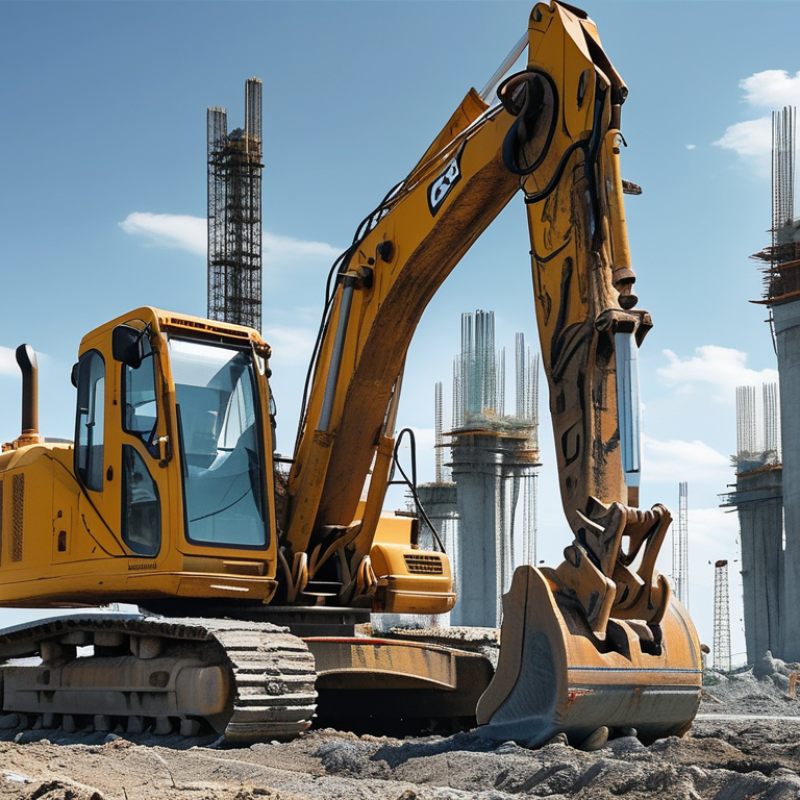
Overview of Static Pile Drivers and Their Applications in Construction
Static pile drivers are increasingly favored in modern construction due to their efficiency and minimal environmental impact. These machines drive piles into the ground without creating excessive noise or vibration, which is crucial in urban areas. A report by the International Construction Equipment Association highlighted that the use of static pile drivers can increase productivity by up to 40% compared to traditional methods.
The versatility of static pile drivers makes them suitable for various applications. They are frequently employed in building foundations, retaining walls, and bridges. According to industry studies, static drivers can penetrate dense soil conditions effectively. This advantage reduces the need for additional machinery, thereby saving costs and time. Yet, challenges still exist. Not all soil types are favorable, and technical limitations remain a significant concern.
With ongoing advancements, operators are urged to refine their skills in utilizing these machines. While the benefits are clear, there is room for improvement in training and knowledge sharing. As the market landscape evolves, adapting to new technologies and techniques will be vital for maximizing the efficiency of static pile drivers. Only then can the construction industry fully leverage their potential while navigating emerging challenges.
Key Features to Consider When Choosing a Static Pile Driver Model
When selecting a static pile driver model, several key features demand attention. The weight of the driver significantly impacts its performance. Heavier models provide more driving force, while lighter ones may offer better mobility on-site. It’s crucial to strike a balance between strength and maneuverability, especially when working in tight spaces or soft soils.
Additionally, the power source is essential. Electrically powered models are quieter and more environmentally friendly, but diesel-powered units often deliver greater force. Assess the project's location and environmental regulations to make a suitable choice. Furthermore, consider automation features. High-tech models with automated controls can enhance precision, reduce operator fatigue, and improve efficiency.
Another important aspect is the maximum pile length and diameter the driver can handle. This varies across models, affecting their versatility for different construction tasks. It’s worth reflecting on the specific needs of your project. Are you deploying shorter or longer piles? A mismatch could lead to unnecessary delays or increased costs. Always evaluate the features against actual project demands to ensure the best fit.
Top 10 Static Pile Driver Models for Efficient Construction
| Model | Driving Force (kN) | Weight (kg) | Maximum Pile Length (m) | Power Source | Key Feature |
| Model A | 500 | 2000 | 10 | Electric | Low Noise Operation |
| Model B | 600 | 2500 | 12 | Diesel | High Efficiency |
| Model C | 450 | 1800 | 8 | Electric | Compact Design |
| Model D | 700 | 3000 | 15 | Diesel | Robust Build |
| Model E | 550 | 2200 | 11 | Electric | Flexible Operation |
| Model F | 620 | 2600 | 14 | Hybrid | Eco-Friendly |
| Model G | 480 | 1900 | 9 | Electric | User-Friendly Controls |
| Model H | 670 | 2800 | 13 | Diesel | Enhanced Stability |
| Model I | 530 | 2100 | 10.5 | Electric | Rapid Setup |
| Model J | 590 | 2400 | 12.5 | Hybrid | Innovative Design |
Comparison of the Top 10 Static Pile Driver Models Available Today
When exploring the landscape of static pile drivers, understanding the nuances of each model is critical for effective construction. A comprehensive industry report by the International Foundation Conference highlighted that static pile drivers are increasingly favored due to their minimal environmental impact. Research indicates that they can reduce noise pollution by up to 50%, a key concern in urban projects. Moreover, these machines excel in precision, achieving pile placement within a tolerance of just a few millimeters, enhancing structural integrity.
A comparison of the top 10 models reveals a range of capabilities suited for different project sizes. Notably, some drivers are equipped with advanced hydraulic systems that enable a higher energy transfer, resulting in quicker pile installation times. A recent survey published in the Engineering News-Record found that projects utilizing modern pile drivers experienced a 25% reduction in overall installation time. However, users should be aware that not all models perform equally in diverse soil conditions, necessitating careful selection based on environmental factors.
Understanding specifications and performance metrics is vital. Some static pile drivers operate at varying depths, impacting not only efficiency but also safety. The machinery’s adaptability is essential, especially in varying geological landscapes. While advancements in technology provide many benefits, contractor training on the equipment's limitations remains crucial. Not all operators may be fully acquainted with each model's unique features, leading to potential inefficiencies and project delays.
Advantages of Using Static Pile Drivers Over Other Piling Methods
Static pile drivers have gained popularity in construction due to their unique advantages compared to traditional methods. They operate quietly, reducing noise pollution at job sites. This can be crucial in urban areas where minimizing disturbance is essential. The precision involved in static driving ensures minimal vibration, preserving the integrity of surrounding structures. It's a method that promotes safety and efficiency.
Choosing the right equipment is vital. Look for models that match your project needs. Ensuring the tensile strength and driving capabilities of the driver can prevent potential failures. Regular maintenance checks can also prolong the equipment's lifespan and enhance productivity.
Using static pile drivers can lead to less environmental disruption. Their operation allows for better site management and greater control over the installation process. However, operators must be trained to handle this equipment properly. Investing in skilled personnel is key to achieving optimal results. The initial cost may be higher, but the long-term benefits are worth considering.
Top 10 Static Pile Driver Models for Efficient Construction
This chart displays the efficiency ratings and driving capacities of various static pile driver models. The data illustrates the advantages of using static pile drivers over other piling methods.
Future Trends in Static Pile Driver Technology and Innovation
The future of static pile driver technology is rapidly evolving. As construction demands increase, innovation is key. Engineers are now focusing on enhancing efficiency and sustainability. New materials and designs are being explored. These advancements promise to reduce energy consumption during operations. Smart technologies, like sensors, are becoming integral. They can monitor performance in real time, ensuring optimal operation.
We might see automation playing a larger role. Automated systems could lead to improved precision and speed. However, there are challenges. The transition to automated systems may face resistance. Training workers on these new tools is essential. Furthermore, evolving regulations may impact the adoption of new technologies.
Environmental considerations are also a priority. Innovations that reduce noise and vibration levels are emerging. Future models may incorporate greener practices, aligning with sustainability goals. Overall, while promising trends are on the horizon, stakeholders must critically assess their implications. The journey towards innovation in static pile driving will require careful thought and collaboration.